Cosby Prepares “Unflinching” Hip-hop Album
By admin | April 15, 2008
Comedian Bill Cosby’s hip-hop album, described as an “unflinching look at life in the 21st century, but without the profanity, misogyny, violence and braggadocio” is expected to reach stores within the next several weeks, a spokesman said.
“Cosby Narratives Vol. 1: State of Emergency” is designed as a companion to Cosby’s provocative book “Come on People: On the Path From Victims to Victors,” which he co-wrote with Dr. Alvin Poussaint last year.
The album weaves hip-hop, jazz, pop, funk and other genres around frank, positive messages drawn from Cosby’s lyrics, stories and musical ideas.
Cosby does not rap or sing on the album. He is on board as executive producer and co-writer. His collaborators include longtime musical colleague Bill “Spaceman” Patterson and Patterson’s partner, Ced-Gee, co-founder of the hip-hop group Ultramagnetic MCs.
Guests include such newcomer MCs as SupaNova Slom, Jace the Great and Brother Hahz. Selections include the New Orleans-jazzed “Where’s the Parade” (a celebration of womanhood), the funky-soul “Dads Behind the Glass” and R&B-vibed “Get on Your Job.”
Reuters/Billboard
Topics: Entertainment | No Comments »
British Music Festival is Criticized For Inviting Jay-Z
By admin | April 15, 2008
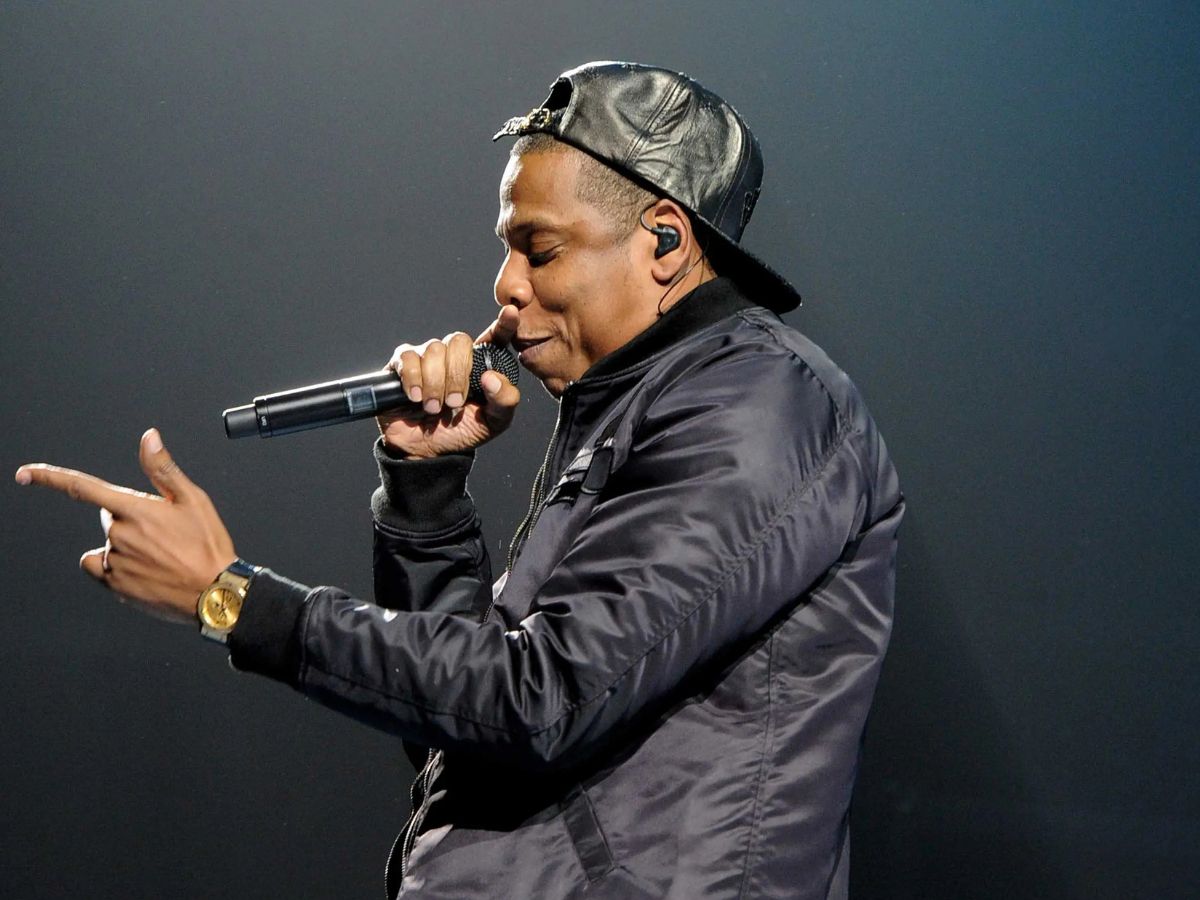
Organizers of one of Britain’s best-known music festivals on Tuesday defended their decision to book Jay-Z as their headline act after Oasis songwriter Noel Gallagher blamed the U.S. rapper for disappointing ticket sales. The outdoor Glastonbury festival is a cornerstone of Britain’s music calendar. But this year’s festival has yet to sell out, in contrast to past years when tickets were snapped up within hours.
Gallagher, whose band headlined the festival in 1995 and 2004, said rap was to blame.
“If it ain’t broke, don’t fix it,” Gallagher said in an interview, an audio of which was posted to the British Broadcasting Corp.’s Web site Monday. “If you break it, people ain’t gonna go. I’m sorry, but Jay-Z? … No chance.” He explained that the inclusion of a hip-hop act went against the festival’s tradition of guitar music, adding: “I’m not having hip-hop at Glastonbury. No way. No. It’s wrong.”
Glastonbury Festival co-organizer Emily Eavis said the 38-year-old festival had a long history of attracting rap acts, including Cypress Hill and The Roots. She said the media stir over Gallagher’s comments revealed an “innate conservatism” in some sectors of British society.
“There is also an interesting undercurrent in the suggestion that a black, U.S. hip-hop artist shouldn’t be playing in front of what many perceive to be a white, middle-class audience. I’m not sure what to call it, at least not in public, but this is something that causes me some disquiet,” she said in an article published Tuesday in The Independent newspaper.
Eavis said she thought Jay-Z was “absolutely the right act” for the festival.
AP
Topics: Entertainment | No Comments »
Procter & Gamble Plans hip-hop Music Foray
By admin | April 14, 2008
Consumer products giant Procter & Gamble is getting into the hip-hop business by launching a record label with Island Def Jam Music Group. The joint venture with be called Tag Records, a nod to Procter & Gamble’s’s Tag body sprays. It will be run by Island Urban president Jermaine Dupri, who helped produce the latest sales disappointment by his girlfriend, Janet Jackson.
Tag Records will unveil its first signing in May, and is promising a marketing budget 10 times the going rate of $1 million or so for most artists.
“My goal is to find artists that have longevity written all over their face,” said Dupri, adding that TAG is expected to launch two artists per year during the course of the three-year deal.
Jackson’s “Discipline,” meanwhile, is currently at No. 45 on the Billboard 200 in its sixth week.
Reuters/Billboard
Topics: Entertainment | 1 Comment »
Ringbacks Underline Mobile, Music Biz Divide
By admin | April 14, 2008
If a ringback tone launches on a network and nobody hears it, did it ever really exist? With the exception of ringtones, no single mobile music application has yet to score an obvious home run with mobile users, even though the number of mobile music products has exploded in recent years.
And while there’s been much discussion about how ease-of-use, need for innovation, pricing and so on contribute to the problem, one of the overlooked issues is that of marketing. Talk to any mobile industry executive or major-label representative, and they’ll tell you all about how excited they are over ringback tones, mobile video, full-song downloads and such. But ask them to take out their checkbook and pay for some advertising around these services and you’ll soon be facing empty air.
Mobile music is the bastard child of mobile and music industry parents, and neither wants to take full responsibility. Both want to make money on mobile music, but both want the other to pay for advertising and marketing needed to generate consumer interest.
Each has its own “legitimate” child that dominates their attention. Both industries make far more money on other products and as such direct their marketing dollars there.
The wireless industry, for instance, is overwhelmingly dominated by voice minutes. Take a look at your mobile phone bill. Unless you’re a teenage text-message fanatic, the bulk of that bill is covering your talk time, not for content and services.
CTIA-The Wireless Assn. revealed at its annual conference earlier this month that what it calls “data revenue” now makes up 17% of carrier revenue. That’s an impressive 53% increase over the year before. But data revenue to a wireless operator is any cash earned from something other than voice minutes. That includes text messages, corporate e-mail applications, photo messaging, etc. According to data from research firm M:Metrics, only about 15% of mobile users even buy ringtones, and far less buy full songs, ringback tones and other products.
Record labels to a degree are in the same boat. This is an industry built on selling records, and as such its marketing core competencies are based on promoting new music and selling albums, not educating fans on a new technology. Digital music revenue in total contributes roughly 30% to labels’ overall revenue pie. Mobile makes up about half that total, with ringtones making up about 75% of the mobile figure. So at best, all other mobile music applications combined contribute maybe 3% to a label’s bottom line.
Spending more on marketing may bump these figures for both industries, but how much can you justify spending on such a niche product?
The argument could be made that mobile music is more important for the music industry — which desperately needs new revenue channels — than it is to the wireless industry — which is making loads of cash of voice minutes. And therefore, the music industry should shoulder the brunt of the marketing effort.
But wireless operators don’t make it easy to do so. Take ringback tones. With ringtone sales sliding, ringback tones have been pegged by the music and mobile industries as the next growth area.
First, there’s pricing. A ringback tone costs about $2 a pop, of which the label gets a cut. But operators charge an additional $1 per month to maintain the service, of which labels don’t see a cent. Why, labels argue, should they spend their dwindling revenue marketing a service in which they don’t share in all the proceeds?
Then there’s branding challenges. Each operator calls its ringback tones service something different — AT&T has Answer Tones, T-Mobile uses CallerTunes, and Sprint likes CallTones. Only Verizon Wireless simply calls them Ringback Tones. The same situation occurred with master ringtones (TrueTones, RealTones, etc.), but labels could simply refer to them using the familiar “ringtone” moniker. Ringback tones take longer to explain.
Finally, ringback tones are a network service, not a device download like ringtones and games. Because ringback tones operate within the network, only the network provider can sell them. That means labels can’t work with third-party content providers like Thumbplay or Jamster to market and sell them, nor can labels sell them from artists’ Web sites directly, like they do with ringtones.
“Everybody calls it something different, and the only way to get it is on the deck,” RCA Records director of mobile marketing Sean Rosenberg says. “How do we message this to our fans?”
Fortunately, ringbacks are a viral application that in a way market themselves. Call a friend with one and you immediately get the idea. Other mobile music services aren’t so lucky. For them to thrive in a digital entertainment market growing increasingly more competitive, mommy and daddy are going to have to start providing a bit more nurturing to their neglected love child.
Reuters/Billboard
Topics: Uncategorized | No Comments »
Gospel Music Biz Prepares For Awards, Conference
By admin | April 14, 2008
Artists and industry personnel representing all facets of the Christian/gospel music community will gather April 19-23 in Nashville for GMA Music Week, the Gospel Music Assn.’s annual gathering. The highlight of GMA Music Week is the 39th annual GMA Dove Awards on April 23. The show will be telecast live from the Grand Ole Opry on the Gospel Music Channel, marking the first time the awards have been broadcast live since 2002. (In recent years, the program has aired in syndication.)
For the first time, representatives from various labels, booking agencies and other companies have banded together to create a task force to promote the show.
“The industry has really gotten behind the Doves from a marketing standpoint,” Gospel Music Assn. president/CEO John Styll says. “There’s going to be a lot of marketing to drive viewers to the show. So more people are going to be aware of it and likely to watch it this year than ever before.”
The marketing task force has created e-mail blasts that key companies and artists are sending to their databases as well as a videoclip that artists can use on tour to promote the Doves.
“You’ll see Web site banners on our site, radio station sites and other Web sites,” Styll says. “You’re going to see visibility at retail both physically and online.”
The Doves will conclude four days of seminars, showcases and workshops. Among the high-profile speakers are management guru Ken Blanchard and evangelist Louie Giglio, founder of the college-themed Passion conferences.
Nightly concerts will spotlight all the diverse styles under the gospel music umbrella, including pop, rock, rap, Southern gospel, urban gospel and Latin music. A worship service scheduled for April 20 at Nashville’s historic Ryman Auditorium will be hosted by Michael W. Smith, Mandisa, Fred Hammond and Israel & New Breed.
Reuters/Billboard
Topics: Entertainment | 1 Comment »